Why the future on our screens is always dark — and what a brighter one would need
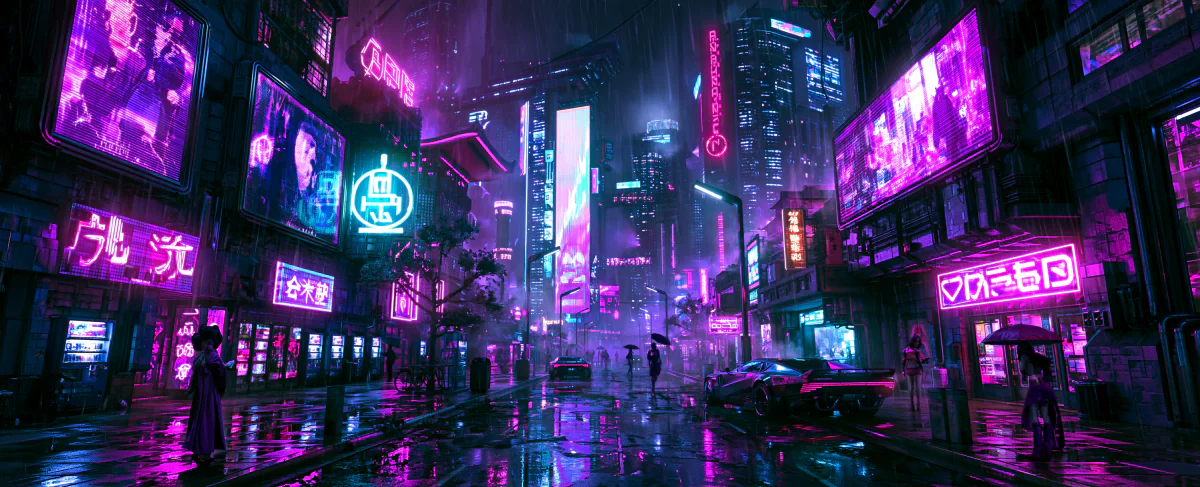
Rain. Neon. Darkness. Ask for a picture of the future and this is what most of us see. A warning is useful. A warning is not a map.
Ask someone to picture the future, and the picture arrives almost by itself: rain on glass, neon in the dark, a small figure under very large buildings. The first film of the Nexusland channel begins with that picture and asks a plain question. Can you name one film, one show, one game about a future you would actually want to live in?
The film is shot and stands in a first cut. This article follows its argument in the paper’s own format, The Other Way: first the signal, with its sources; then why it matters; then what we think, named as an opinion; and then the larger part — how we would build it differently.
01The signal
A warning that became a style
Cyberpunk took shape in the early 1980s as a warning. Blade Runner reached cinemas in 1982[1]; William Gibson’s novel Neuromancer followed in 1984[2]. The warning was simple: high technology can live right alongside loneliness and concentrated control. Systems are powerful, and people are small.
Then something turned. The warning became a look: a moodboard for games, for fashion, for brands. The message thinned out, and the decoration stayed.
The dark ink is in our expectations too. In January 2025 Pew Research Center published a survey of 36 nations. A median of 57% of adults said that children in their country will grow up to be financially worse off than their parents; a median of 34% said better off[3]. In the United States the “worse off” answer was given by 74%, in Canada by 78%, in the United Kingdom by 79%, in France by 81%.
And stories change what people are prepared to justify. In 2018 the political scientists Calvert Jones and Celia Paris reported three experiments in the journal Perspectives on Politics. They found consistent evidence that dystopian narratives increase the willingness to justify radical — especially violent — forms of political action[4]. The finding is about what people are ready to justify, not about what they do; and the same paper found no evidence that such stories reduce political trust.
02Why it matters
A warning tells you what to avoid, not where to go
The fair part first. Dystopias are useful. They taught more than one generation to notice surveillance, loneliness, and the price of convenience. Nobody should wish for fewer honest warnings.
But a warning repeated too often becomes a destination. When every picture of tomorrow is dark, the dark stops being a caution and becomes the expected weather. The timing makes this more than a matter of taste. Artificial intelligence is changing what a human life may look like, and the film’s point is that we are walking into that world without a picture of where we want to go.
A warning is not a map. A map shows you where to go.Roman Kotlar, Episode 01 of the Nexusland channel
03What we think
Before you build a future, you have to be able to picture one
Our view, and it is a view: what is scarce is not technology but pictures worth walking toward. That is the first principle the channel offers. Before you build a future, you have to be able to picture one you would want to live in.
A picture has changed reality before. Star Trek first aired on 8 September 1966 and showed a hopeful future in which humanity worked together[5]. In 1977 NASA contracted Nichelle Nichols, who played Lieutenant Uhura, for a four-month campaign to encourage women and minorities to apply to be astronauts; NASA says it inspired hundreds to apply. The next astronaut class, appointed in 1978, included Sally Ride, the first American woman in space, and Guy Bluford, the first Black American in space[6].
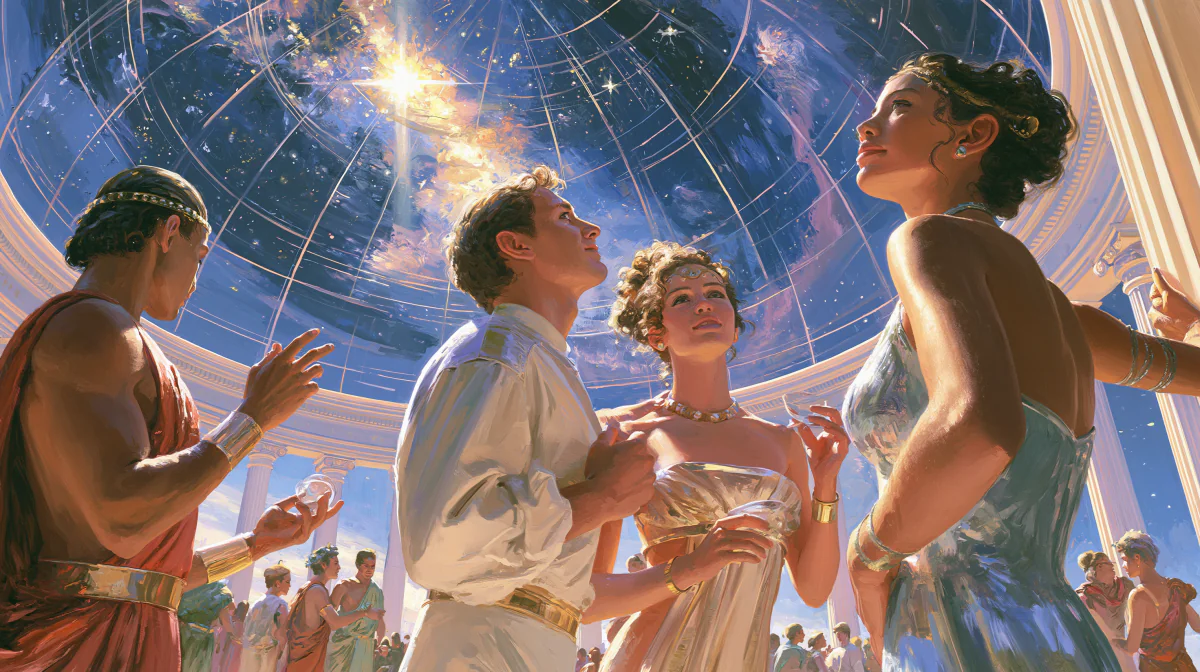
We also think that grey is learned. “We weren’t born preferring grey. We were trained to expect it,” the film says — screen by screen, year by year. An expectation that was trained can be trained again.
04The other way
Daylight after neon
HORIZONWhat follows is a direction. It is not built yet. There is no live product yet. Here is what we are building.
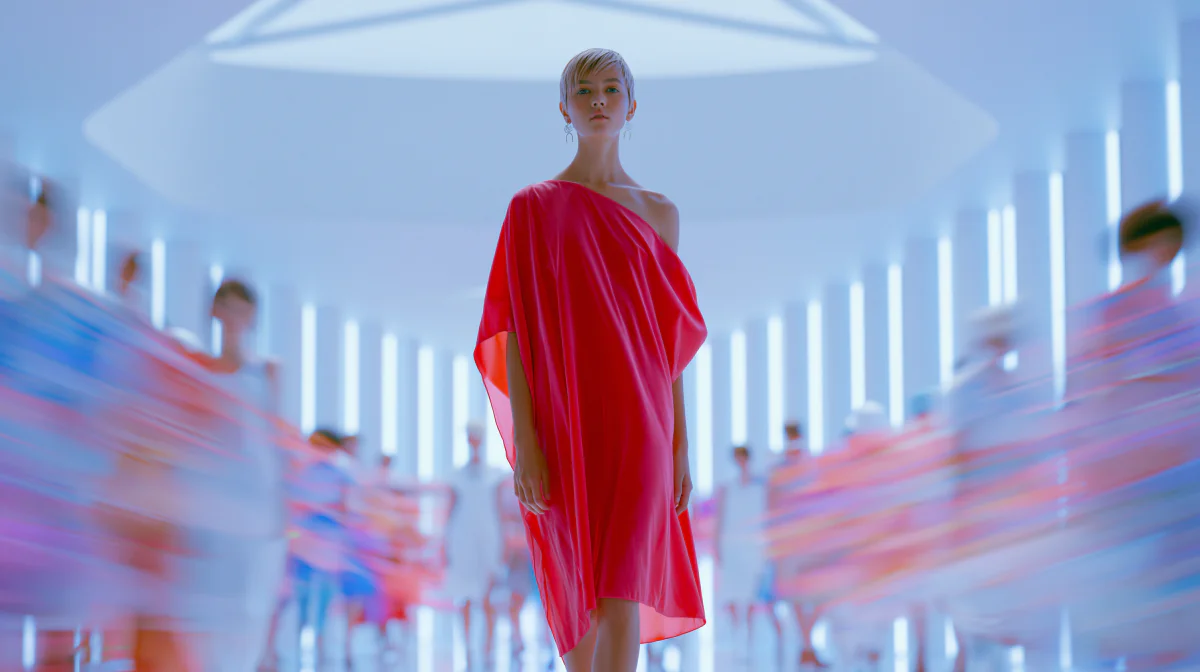
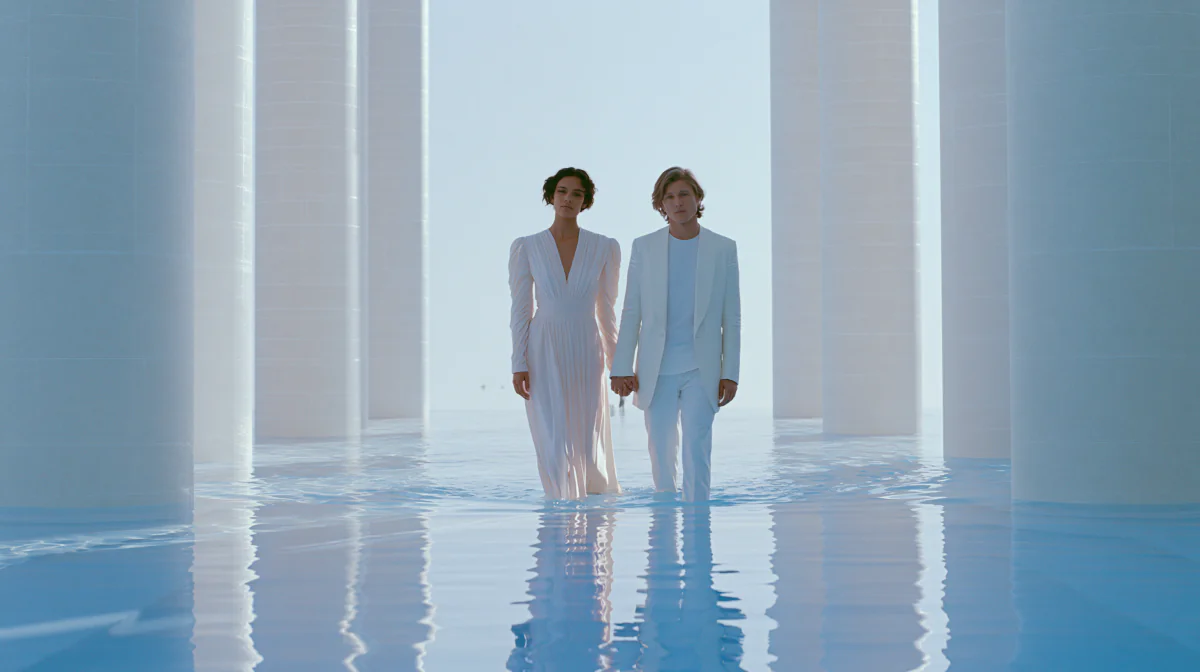
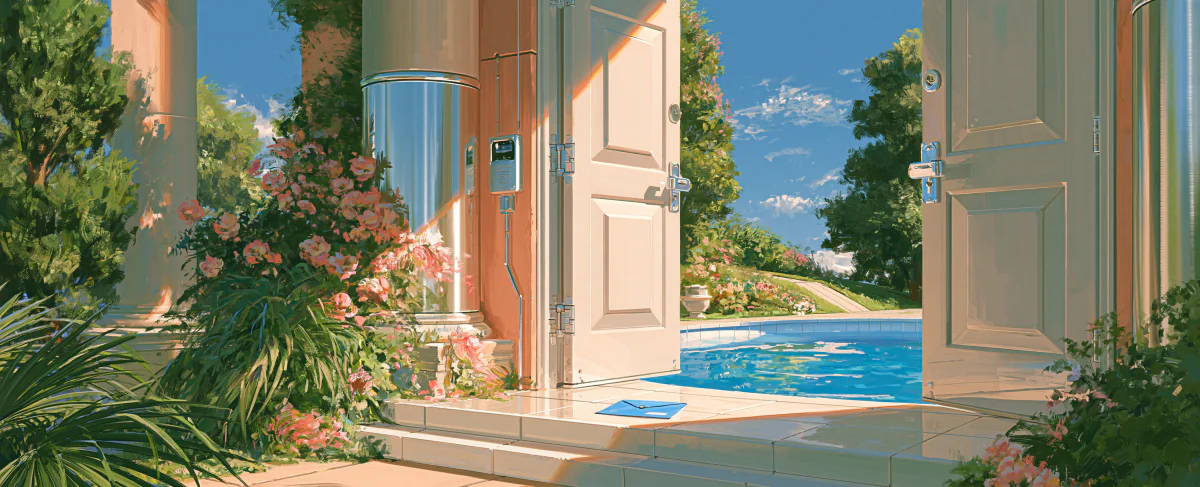
So what does a good future look like? The film answers in three short images. Daylight after neon. A garden after a dark alley. A civic square after a corporate maze. This is not childish optimism. It is a serious aesthetic for people who know the world is wounded and still refuse to make the future look like surrender.
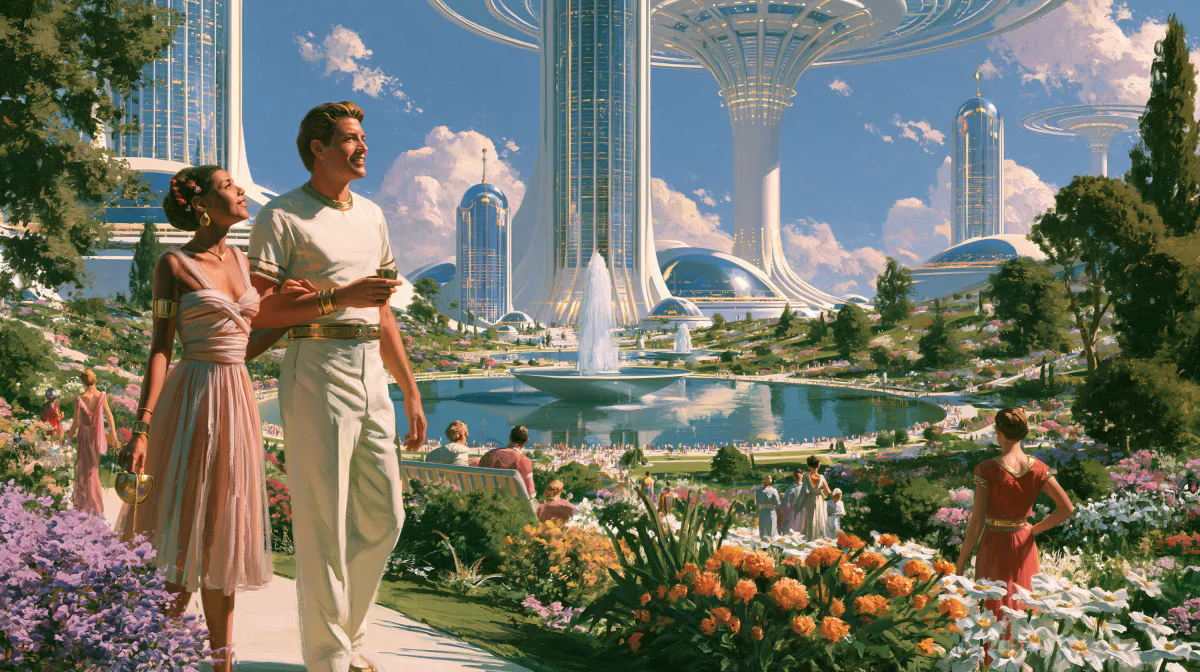
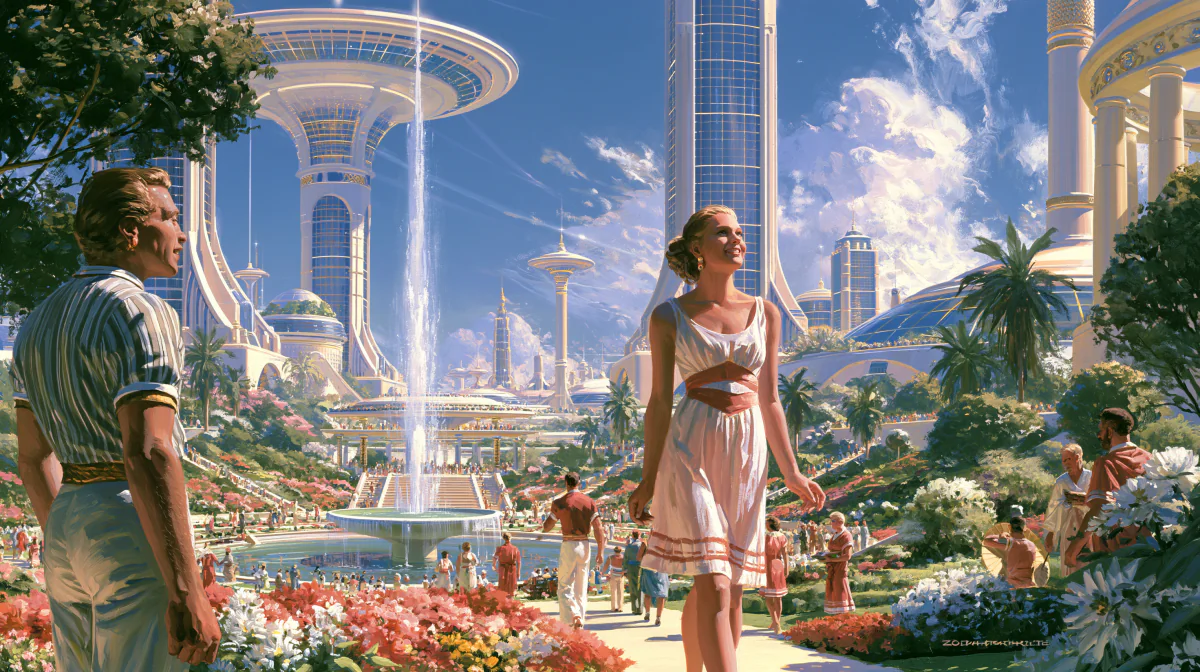
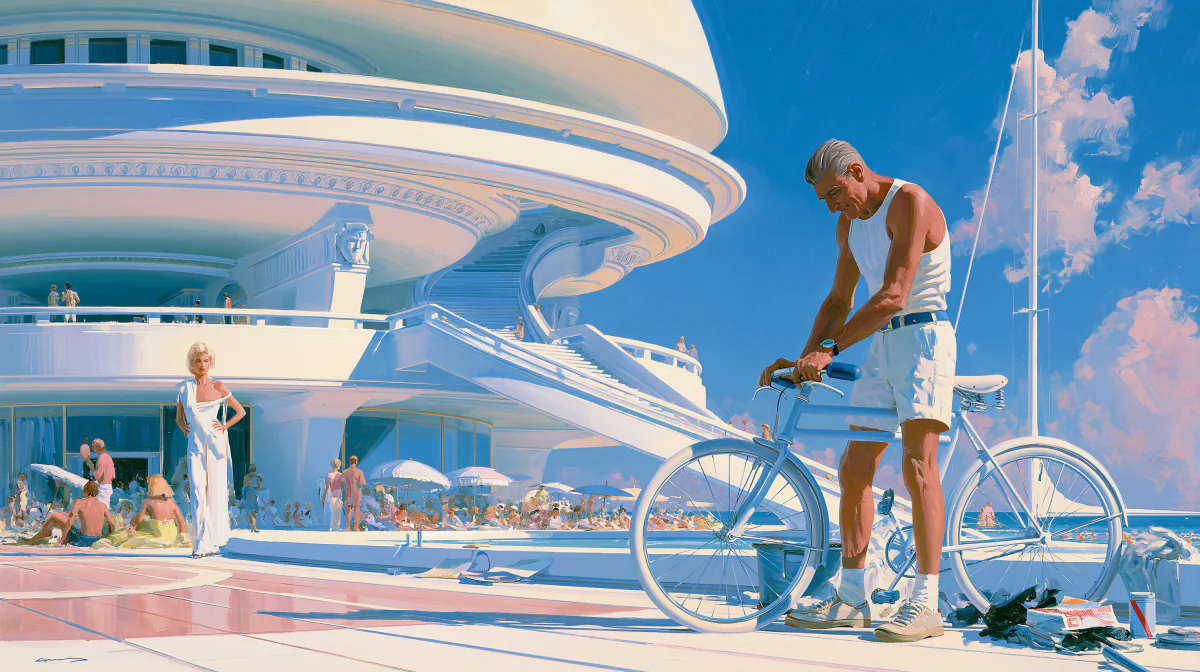
The direction has a name in the Nexusland canon: Luminous Futurism — the future should be warm, material, and human, and it is built, not awaited. Its test is whether people can live there. No decorative plants on lifeless towers. A good future must be inhabitable, not just impressive: a place to study, work, rest, raise children, celebrate, recover, and grow.
Nexusland begins with a diagnosis, not with a product. We are describing, piece by piece, what a more dignified internet would look like: networks and tools that serve people instead of exploiting them. No manipulation, no outrage machine, no one reduced to a number. Not one more app, but a social world — a place you live in, instead of a feed you scroll.
The order matters as much as the picture. Signal before scale. Culture before concrete. Trust before monetization. What exists today is the foundation: the Ideals, the visual code, and the structure of the world, written down across hundreds of pages — and a first film. We promise only the next step.
05Already happening
A garden over a freeway
A coyote is the first animal photographed on the wildlife bridge over a Los Angeles freeway. On 28 October 2026, scientists captured the first photo of an animal on the Wallis Annenberg Wildlife Crossing: a coyote, climbing the southern slope of the still-unfinished structure. The U.S. National Park Service reported it on 4 November. The crossing is a planted bridge over the 101 Freeway near Agoura Hills, a road that carries more than 300,000 vehicles a day. It is built to reconnect wildlife habitat in the Santa Monica Mountains with the Simi Hills to the north. The bridge is not yet officially open to wildlife; the Park Service is beginning scientific monitoring of how animals use it.[7]
Why it matters for Nexusland:A garden laid over a freeway, and an animal that found it before the opening: a small picture of daylight after concrete. It is the idea behind Luminous Futurism — a future that is inhabitable, not just impressive. We have built nothing like it; it is the direction we draw.
One small action from the film, for this week: find one image of a future that feels like home — a painting, a drawing, anything — and look at it for a few minutes.
Sources
- 1Warner Bros.Blade Runner — original theatrical release 25 June 1982.
https://www.warnerbros.com/movies/blade-runner - 2The Encyclopedia of Science FictionWilliam Gibson — Neuromancer (New York: Ace Books, 1984).
https://sf-encyclopedia.com/entry/gibson_william - 3Pew Research Center · 9 January 2025Views of children’s financial future (survey of 36 nations, spring 2024).
https://www.pewresearch.org/global/2025/01/09/views-of-childrens-financial-future/ - 4Perspectives on Politics, vol. 16, no. 4 · December 2018Calvert W. Jones and Celia Paris, “It’s the End of the World and They Know It: How Dystopian Fiction Shapes Political Attitudes”.
https://www.cambridge.org/core/journals/perspectives-on-politics/article/its-the-end-of-the-world-and-they-know-it-how-dystopian-fiction-shapes-political-attitudes/3853105561CB840EAB79258DC2575849 - 5NASA History55 Years Ago: Star Trek Debuts, Begins an Enduring Relationship with NASA.
https://www.nasa.gov/history/55-years-ago-star-trek-debuts-begins-an-enduring-relationship-with-nasa/ - 6NASANichelle Nichols Helped NASA Break Boundaries on Earth and in Space.
https://www.nasa.gov/people-of-nasa/special-observances/nichelle-nichols-helped-nasa-break-boundaries-on-earth-and-in-space/ - 7U.S. National Park Service · 4 November 2026National Park Service to Begin Scientific Monitoring at Wallis Annenberg Wildlife Crossing.
https://www.nps.gov/samo/learn/news/national-park-service-to-begin-scientific-monitoring-at-wallis-annenberg-wildlife-crossing.htm - 8Nexusland channelEpisode 01, “Rain. Neon. Darkness.” — filmed, first cut; not yet released. Quotations are from the film’s script.
- 9Nexusland canonLuminous Futurism Statement; Project Passport; Official Public Manifesto, IV: Build doctrine.
Published in the first edition, 20 November 2026. Signed by the paper: Nexusland Today. If a fact here is wrong, it will be corrected openly, with a date. Corrections