Nexusland Today
Friday, 20 November 2026
Vol. I · No. 1 · First edition

The Future

Good news of the world: things that have already happened and made life a little better for people.

How we choose: it has already happened, not been promised; every fact has a named source with a link; no politics, no war, no advertising. Each story ends with one line on why it matters for Nexusland. The headline says the fact and the place.

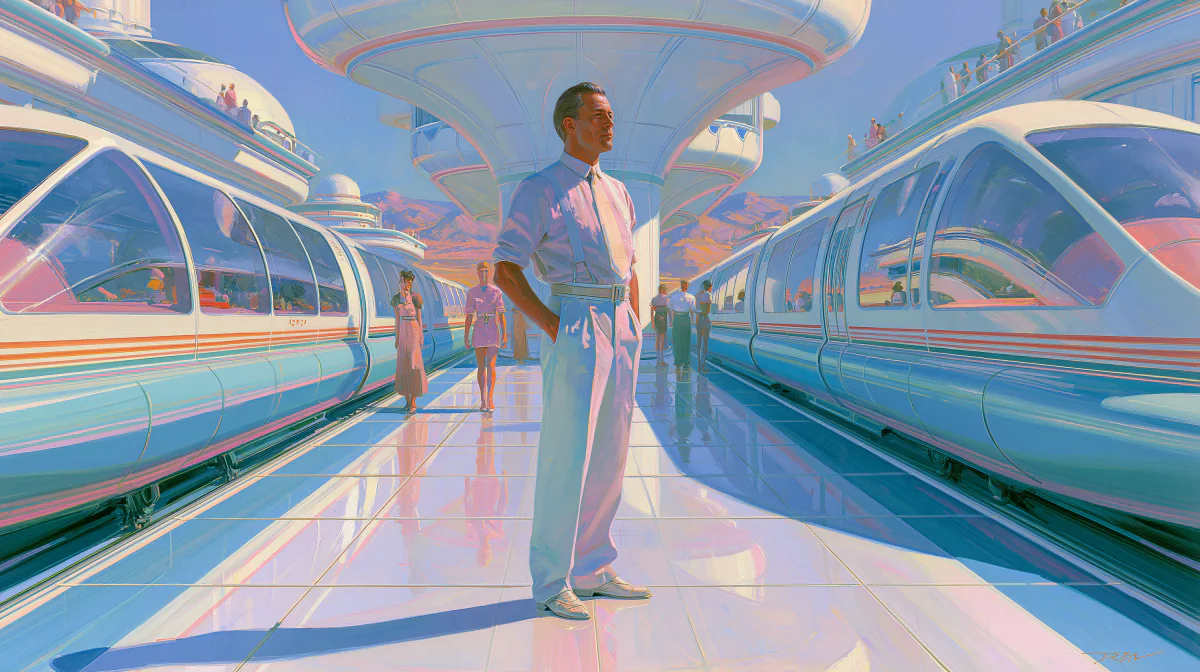
A man stands on a gleaming platform between two streamlined monorail trains.
Daylight through a round opening: the simplest good news there is. Nexusland Conceptual Art · CONCEPT

How we choose

Six conditions, all of them

A story enters the rubric only when every answer is yes. When no story qualifies, the rubric stays empty. Nexusland took no part in any of the work reported here and has no connection with the organisations named. Their names and marks belong to their owners. The summaries are ours; the facts are theirs. Follow the links.

  1. 01

    It has already happened

    No announcements, plans or promises. We hold other people’s news to our own rule of patience.

  2. 02

    The source is named

    One primary source, or two independent outlets with editorial standards. Every link is on the page.

  3. 03

    We opened the page

    The fact was found in the text of the source itself, not in a retelling.

  4. 04

    It is fresh

    The event or its publication is no older than thirty days. Older only with a reason given.

  5. 05

    No politics, no war

    No parties, elections or geopolitics; no advertising; no celebrities as heroes.

  6. 06

    One honest line

    Each story ends with “Why it matters for Nexusland” and says plainly that the achievement is not ours.

Abstract image: glassy green blades of grass.
Illustrative image

01Cities & nature·California, USA·28 October 2026

A coyote is the first animal photographed on the wildlife bridge over a Los Angeles freeway

On 28 October 2026, scientists captured the first photo of an animal on the Wallis Annenberg Wildlife Crossing: a coyote, climbing the southern slope of the still-unfinished structure. The U.S. National Park Service reported it on 4 November.

The crossing is a planted bridge over the 101 Freeway near Agoura Hills, a road that carries more than 300,000 vehicles a day. It is built to reconnect wildlife habitat in the Santa Monica Mountains with the Simi Hills to the north. The bridge is not yet officially open to wildlife; the Park Service is beginning scientific monitoring of how animals use it.

Why it matters for Nexusland:A garden laid over a freeway, and an animal that found it before the opening: a small picture of daylight after concrete. It is the idea behind Luminous Futurism — a future that is inhabitable, not just impressive. We have built nothing like it; it is the direction we draw.

Sources: U.S. National Park Service, 4 Nov 2026; LAist, 5 Nov 2026
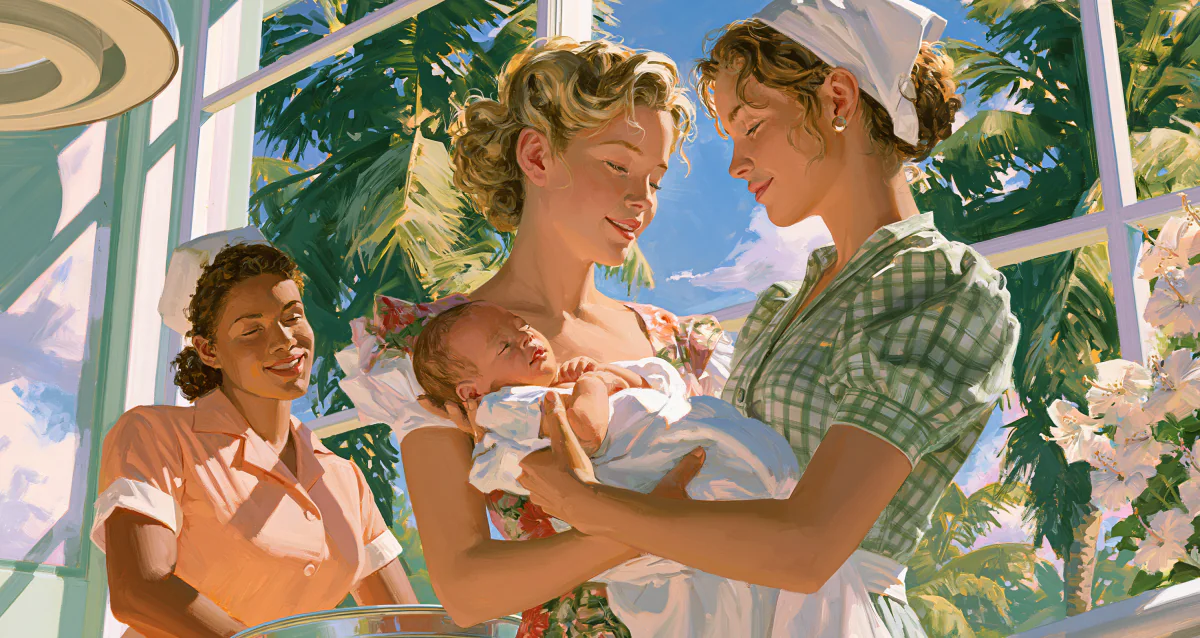
A young mother holds her newborn while two smiling nurses look on in a sunny clinic.
Nexusland Conceptual Art · CONCEPT

02Public health·Barbados·30 October 2026

Barbados is certified by the WHO for eliminating mother-to-child transmission of HIV

On 30 October 2026 the World Health Organization announced that Barbados has eliminated mother-to-child transmission of HIV as a public health problem. The certification follows an independent assessment. From 2022 to 2024, no new HIV infections from mother-to-child transmission were reported among infants born in Barbados.

The assessment found the same high coverage at every step over the three years: 98% of pregnant women received antenatal care, 98% were tested for HIV, and 98% of pregnant women living with HIV received antiretroviral treatment.

Why it matters for Nexusland:Nothing here is a single dramatic act; it is care that reached almost everyone, three years in a row. Ideal 16 says the vulnerable deserve particular care. That is a standard we hold for what we are still only designing.

Source: World Health Organization, 30 Oct 2026

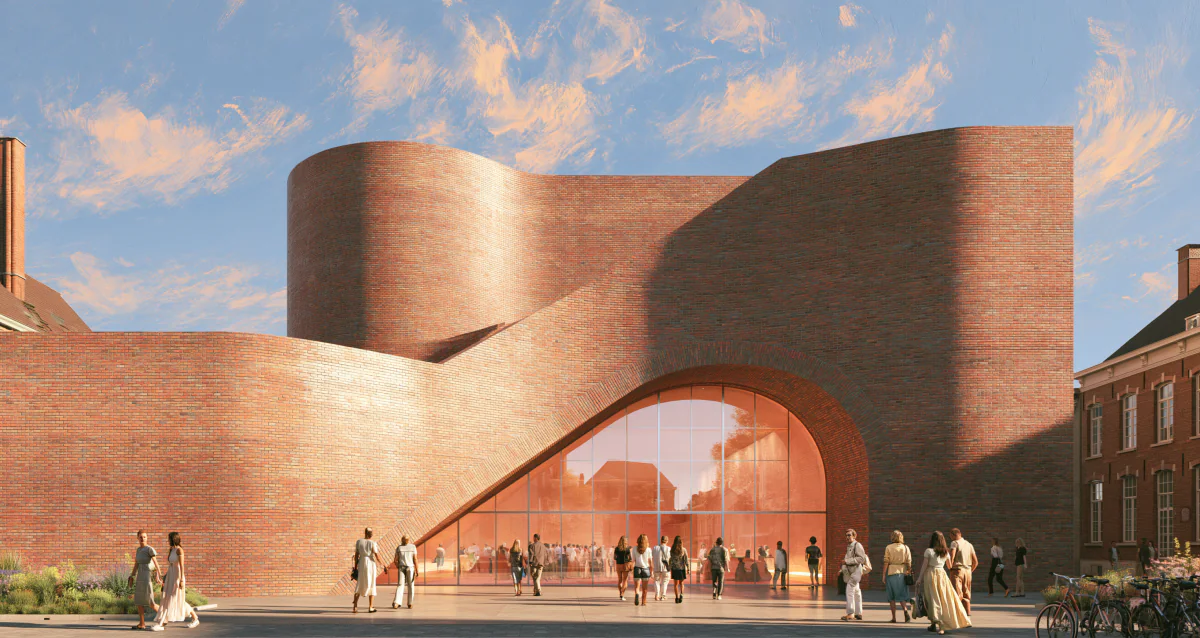
A new museum wing of warm reclaimed brick curves around a tall arched entrance where visitors gather.
Nexusland Conceptual Art · CONCEPT

03Architecture·Ghent, Belgium·3 October 2026

Design Museum Gent has reopened with a wing built of bricks made from the city’s own rubble

Design Museum Gent reopened on 3 October 2026 after a four-year, €20m expansion and renovation, The Art Newspaper reports. A new five-level wing, DING (Design in Gent), adds around 2,000 square metres for lectures, workshops and exhibitions. It was designed by Carmody Groarke of London with RE-ST and ATAMA.

The wing is faced with more than 82,000 locally produced bricks. According to The Guardian’s review of 20 October, each brick is 63% construction waste sourced within 8 km of the museum, crushed and compressed with hydrated lime rather than fired — which saves two-thirds of the embodied carbon of a regular clay brick.

Why it matters for Nexusland:A public building made, visibly, of what its own city threw away. Material honesty is part of Luminous Futurism, and beauty before noise is one of our founding principles. We cite it as a picture of the direction, not as something of ours.

Sources: The Art Newspaper, 6 Oct 2026; The Guardian, 20 Oct 2026

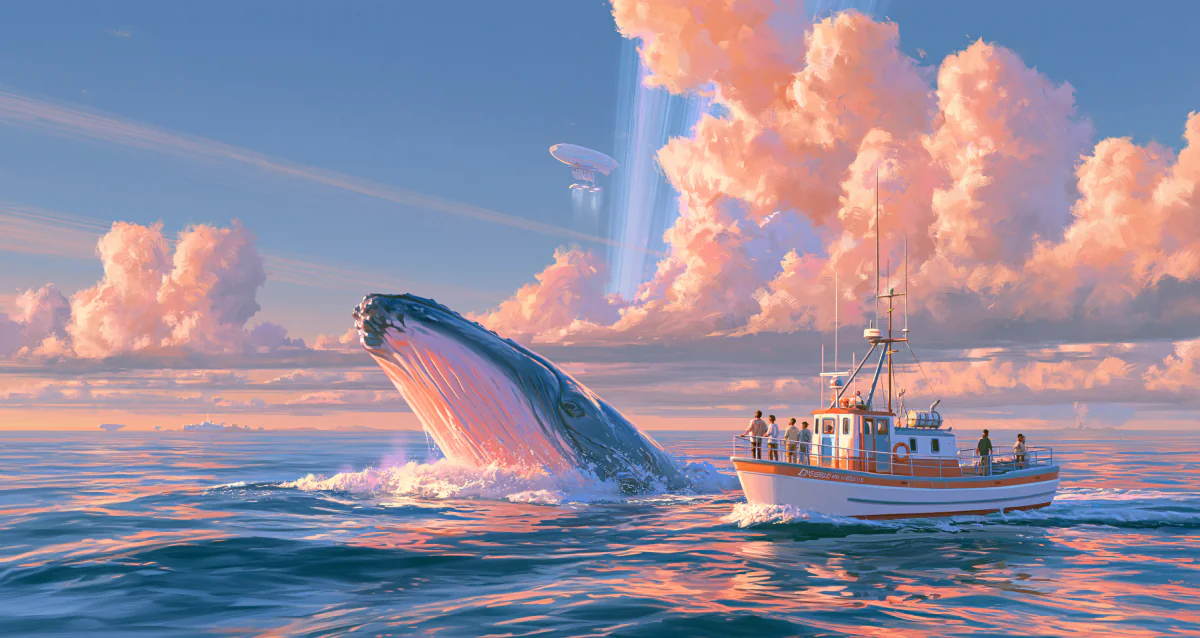
A right whale rises from a calm sea beside a small research boat under pink evening clouds.
Nexusland Conceptual Art · CONCEPT

04Nature·Gulf of St. Lawrence, Canada·2 November 2026

A previously unknown right whale calf brings the season’s count to 24 mother-calf pairs

Scientists at the New England Aquarium in Boston have identified a previously unknown North Atlantic right whale calf. It was photographed with its mother on 25 September 2026 near Anticosti Island, Quebec, by researchers of the Mingan Island Cetacean Study; the aquarium announced the finding on 2 November.

The mother, known as Silt, is at least 38 years old, and this is her sixth known calf. The sighting raises the 2025–2026 calving season from 23 to 24 mother-calf pairs. The species remains critically endangered, with an estimated population of about 380, and the aquarium notes it still faces entanglement in fishing gear and vessel strikes.

Why it matters for Nexusland:One calf among about 380 animals is counted because people kept a catalogue for decades and looked carefully. Ideal 12 speaks of continuity between generations; patient records are how care becomes knowledge. Our own archive is only beginning.

Sources: New England Aquarium, 2 Nov 2026; Associated Press, 6 Nov 2026

Abstract image: coral petals, close up.
Illustrative image

05Culture & heritage·Herculaneum, Italy·5 November 2026

Two Roman houses in Herculaneum are open to visitors again after decades

After decades of being closed to the public, the House with the Mosaic Atrium and the Wattle-and-Daub House are once again open to visitors and part of the tour route of the Herculaneum Archaeological Park, the park announced on 5 November 2026.

The reopening follows restoration and marks a new phase of the park’s Domus Project, carried out in its long collaboration with the Packard Humanities Institute. The Wattle-and-Daub House is the first house in the park where the public is able to go up to the first floor.

Why it matters for Nexusland:Two homes, nearly two thousand years old, repaired slowly and handed back to the public. The manifesto calls memory architecture. It is a reminder to us to build things that someone will think worth restoring.

Source: Parco Archeologico di Ercolano, 5 Nov 2026

Diagonal crystal shards and planes in aqua and violet.
Illustrative image

06Science·196.8 million km from Earth·5 November 2026

Europe’s Hera spacecraft sends its first close-up of the asteroid pair it was sent to study

The European Space Agency’s Hera mission for planetary defence has acquired its first close-up of the Didymos binary asteroid system, ESA reported on 5 November 2026. The image was taken by the spacecraft’s Asteroid Framing Camera from 60 km away, with Hera 196.8 million km from Earth.

It shows the 780-metre Didymos clearly; most of its 151-metre moon, Dimorphos, is hidden in shadow. Dimorphos is the body that NASA’s DART spacecraft struck on 26 September 2022, shortening its orbit by about 33 minutes. Hera was sent to measure in detail what that impact did.

Why it matters for Nexusland:Two agencies, two spacecraft, years apart: one acts, the other returns to check the result. We admire the second half. Ideal 8 asks that words stay answerable to reality — and so should deeds. It is a habit we want in our own reports.

Sources: European Space Agency, 5 Nov 2026; German Aerospace Center (DLR), 12 Nov 2026

Abstract image: a burst of prismatic light.
Illustrative image

07Science·Space telescope Euclid·12 November 2026

The Euclid telescope releases its first major batch of data: the light of more than a billion objects

On 12 November 2026 the European Space Agency’s Euclid mission released its first major batch of data, named DR1-Foundation. It comprises around 13 months of observations — the first major release since the space telescope’s launch in mid-2023.

According to ESA, the release captures the light of more than a billion objects and covers an area of sky as big as 9,500 full Moons. It is the foundation for what the agency calls the mission’s largest-ever 3D map of the cosmos. Physics World reported the release on 12 November 2026.

Why it matters for Nexusland:A map of a billion objects, published so that others can work on it. The manifesto says a civilization has to become imaginable before it can be inhabited; maps are how that begins. Our own map is symbolic, and we say so.

Sources: European Space Agency, 12 Nov 2026; Physics World, 12 Nov 2026

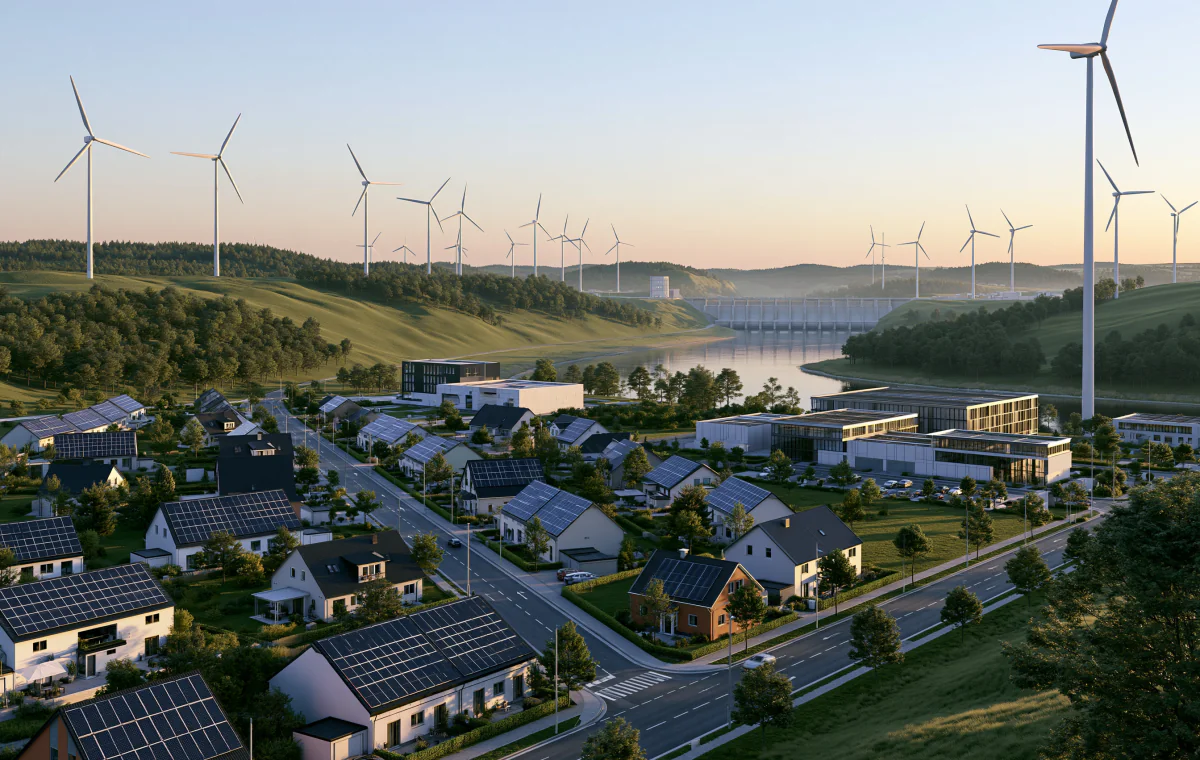
Solar roofs, wind turbines and a distant dam above a green valley town.
Illustrative image

08Energy·World·24 October 2026

Renewables supplied 34% of the world’s electricity in 2025, Our World in Data reports

In 2025 renewables — solar, wind, hydropower and others — made up 34% of global electricity, according to a data insight published by Our World in Data on 24 October 2026. The figures come from Ember and the Energy Institute’s Statistical Review of World Energy (2026).

The note credits rapid growth in solar and wind. For comparison, it gives the 2025 share of nuclear power as 9%; in 2000 the two sources had similar shares. This is a yearly summary of data, not a single event.

Why it matters for Nexusland:A third of the world’s electricity is a number built panel by panel and turbine by turbine. Luminous Futurism says the future is built, not awaited. The figure is a measure of that kind of work; none of it is ours.

Source: Our World in Data, 24 Oct 2026

Glossy waves of molten gold with white highlights.
Illustrative image

09Health·Ethiopia, Nigeria, Pakistan, Uganda, Zambia·11 November 2026

Nearly 1,700 clinics in five countries now run on solar power, Gavi reports

Gavi, the Vaccine Alliance reported on 11 November 2026 that nearly 1,700 primary health care facilities in Ethiopia, Nigeria, Pakistan, Uganda and Zambia have been fitted with solar power, backed by an investment of more than US$30 million. By its estimate, the facilities serve more than 140 million people. The country figures it gives are 398 facilities in Pakistan, 380 in Ethiopia, 371 in Nigeria, 296 in Zambia and 250 in Uganda: 1,695 in all.

The aim is plain: many clinics are far from a power grid, or have electricity for only part of the day. With dependable power, Gavi says, they can keep vaccines at safe temperatures, extend their hours, offer night-time and emergency services and run diagnostic equipment. The alliance adds that it has also supported the deployment of more than 66,400 solar-powered vaccine refrigerators across lower-income countries.

Why it matters for Nexusland:A panel on a clinic roof is technology in its most modest form: it lets a nurse keep the light on and the vaccines cold. Luminous Futurism asks that technology serve people before it impresses them. None of this work is ours; we only draw a world where it is the norm.

Source: Gavi, the Vaccine Alliance, 11 Nov 2026

A fluid cobalt-blue glass form twisting on a pale blue background.
Illustrative image

10Science·Paranal Observatory, Chile·27 October 2026

Astronomers find a double ring of planetary debris around a dead star

Astronomers using the European Southern Observatory’s Very Large Telescope in Chile have found a rare disc of debris around a dead star, ESO announced on 27 October 2026. The star, J1328−1450, is a white dwarf: the dense, burnt-out core left when a star similar to our Sun ran out of fuel. Instead of one ring of vaporised planetary rubble, as around other such stars, it has two concentric rings separated by a clear gap.

According to the team, the double structure is likely maintained by two surviving planet-like bodies: one in the inner ring a few kilometres across, and an outer one that could be as large as Pluto or even our Moon. The disc contains calcium, oxygen, magnesium and iron, a composition similar to rocky material in our own Solar System. The study, led by Nicola Gentile Fusillo of the University of Trieste, was published in Nature Astronomy.

Why it matters for Nexusland:The Sun, too, will one day become a white dwarf, so this is a very long look ahead. We like that someone looks that far and reports only what the light shows. It has nothing to do with our work, except as a lesson in patience and in measuring before speaking.

Source: European Southern Observatory (ESO), 27 Oct 2026

Iridescent glass ribbons twisting on a turquoise and orange gradient.
Illustrative image

11Accessibility·Louisville, Kentucky, USA·30 October 2026

A museum where touching the exhibits is the rule has opened in Louisville

The Dot Experience opened on 30 October 2026 on the campus of the American Printing House for the Blind in Louisville, Kentucky. The 28,000-square-foot space combines a museum, interactive exhibits, an educational centre and a factory tour. Its house rule is the opposite of most museums: touch is encouraged. One exhibit is devoted to the life and legacy of Helen Keller.

According to the trade publication Blooloop, disabled people helped shape the place from the outset, bringing their knowledge and lived experience to the development and testing of its exhibits, navigation and overall environment. The American Printing House for the Blind has spent nearly 170 years fostering access, opportunity and independence; visitors can also tour its factory to see how accessible products are made.

Why it matters for Nexusland:Here access is not a ramp added at the end; it is the brief the building started from. Human dignity before metrics is the standard we set for our own drawings. We have built nothing and tested nothing with the people it is for; this museum has.

Sources: Blooloop, 6 Nov 2026; Indy’s Child (republished by The Dot Experience), 11 Nov 2026; Spectrum News 1, 28 Oct 2026

Abstract image: columns of prismatic glass.
Illustrative image

12Culture & heritage·Palermo, Italy·5 November 2026

Sicily’s oldest museum is whole again, seventeen years after its restoration began

The Antonino Salinas Regional Archaeological Museum in Palermo is fully open again. Its first and second floors were inaugurated on the afternoon of 5 November 2026, and the public was admitted free on 6 November. Founded in 1814, it is the oldest public museum institution in Sicily, housed since 1866 in a seventeenth-century former convent. Restoration began in 2009; the ground floor reopened in 2016, and the refitting of the two upper floors started in 2022.

The reopening brings a discovery made in the museum’s own storerooms. On show for the first time is a ceremonial carriage of the first century AD from the House of Sallust in Pompeii, identified by the museum’s archaeologists among bronze and iron objects from early nineteenth-century Bourbon donations. The new display also has multisensory stations for blind and deaf visitors and pictograms for simplified reading.

Why it matters for Nexusland:Seventeen years is longer than most plans last, and the best find was already in the building, waiting to be recognised. The manifesto calls memory architecture. It is not our work; it is a reminder that keeping and looking again is also a way of building.

Sources: Regione Siciliana, 3 Nov 2026; Italpress, 5 Nov 2026; Lettera 32, 10 Nov 2026

A wide iridescent glass ribbon in lilac and blue.
Illustrative image

13Libraries·San Francisco, USA·14 November 2026

A century-old neighbourhood library in San Francisco reopens, and 1,748 people come on the first day

The Mission Branch of the San Francisco Public Library reopened on Saturday, 14 November 2026. The building, a Carnegie library on its present site since 1915, had been closed since 2020; the renovation itself took three years. On the first day alone, the San Francisco Chronicle reports, 1,748 people came through and checked out 1,769 books. Children and their parents were waiting at the door before it opened the next day.

According to library officials quoted by KQED, the expansion, renovation and restoration cost $40.7 million. The library is now 3,500 square feet bigger, 14,185 square feet in all. A children’s room was added, along with an area for teenagers and a community room that holds around 100 people. The grand staircase, removed during a 1990s earthquake retrofit, has been rebuilt, and it leads up to a new fused-glass window by the local artist Juana Alicia.

Why it matters for Nexusland:A free room full of books, repaired for the next hundred years, with a staircase put back simply because people missed it. Beauty as a public good is how we would put it. It is San Francisco’s library, not ours; our own reading rooms exist only on paper.

Sources: San Francisco Chronicle, 15 Nov 2026; KQED, 14 Nov 2026; San Francisco Public Library, Nov 2026

13 stories · page 1 of 1No endless scroll. The page ends here.

A short welcome, then one letter a week

Follow the build

What we built, what we decided, what comes next.