Ten cities and a crown: a reader’s guide to the map
The Nexusland canon names ten regional cities, an orbital crown above them and three far places kept locked. None of them is built. Here is what each name stands for, and what the map does not claim.
Nexusland has a map, and the first thing to say about it is what it is not. It is not a claim on any ground. The Public Lexicon, the project’s plain glossary, says that everything on the map is symbolic and community-based: “a picture of belonging, not real territory, sovereignty, or property.”
None of the cities below exists. There are no streets to walk and nobody lives there. What exists is the canon: a set of documents that names ten regional cities, one crown above them and three distant places kept locked, and describes how a city of this kind is meant to work. This guide goes through the names one by one.
01Two words
What the canon means by a city, and by a community
A city in the canon is not a settlement. It is a gathering point: one symbolic city for each large region of the world. Its role is to gather the region while every country inside it stays distinct. Each city is designed to hold its own communities and to be seen from the side, as a skyline.
A community is a group of people gathered around a purpose. The canon’s own examples are workshops, book clubs, running clubs, cooking and astronomy. Its central idea is to give such a group a body: in the design, every community is a building, its size is its contribution, and its light is its audience.
Communities are not Houses. The four Houses (Mentis, Cultura, Fortitudo, Aequalitas) are stable directions of growth chosen by a Resident, the canon’s word for anyone who joins. The canon calls the Houses the vertical of the world and the communities its horizontal: many, purpose-driven, born and fading. The two layers are kept apart on purpose, so that people of different Houses meet in the same woodworking community.
Every community is a building. Builders raise the height, the audience lights the windows, and the sky remembers everything people dared to entrust to it.The City and the Communities, Nexusland canon
02The Americas
Northslight, Puerto del Sol, Montebravo
A word on sources. The one-line characters below come from the Public Manifesto, which gives every city a “public meaning”. The notes on roles come from the map directory of the founding manifesto. Both describe an intended character, not a place that can be visited.
- Northslight
- North America. The canon gives it a northern Atlantic civic horizon of scale, clarity and technological modernity. On the map it gathers the northern Atlantic world into a single city.
- Puerto del Sol
- The Caribbean and northern Latin America. It is drawn as a radiant city of crossing routes, warmth, movement and shared vitality. Its role is to bind the Caribbean basin and the northern Latin American arc into one city without dissolving the individuality of any country inside it.
- Montebravo
- South America. A city of altitude, force, memory, rivers and continental intensity: the southern continent drawn as one high-energy city.
03Europe, Africa, Western Asia
Euronis, Zawadi, Kalfara
- Euronis
- Europe. A continental city of dense inheritance, institutions, layered memory and civic continuity. In the design of the skyline, a tier of a Euronis tower is finished with a balustrade.
- Zawadi
- Africa. A great city of plurality, strength and civilizational depth. The map keeps the continent whole in one city, and the canon adds in the same sentence that this must not flatten the differences between its countries.
- Kalfara
- Western and Inner Asia. A broad arc of history, trade, inheritance and connection. The canon notes that the city is meant more broadly than a narrow “West Asia” label.
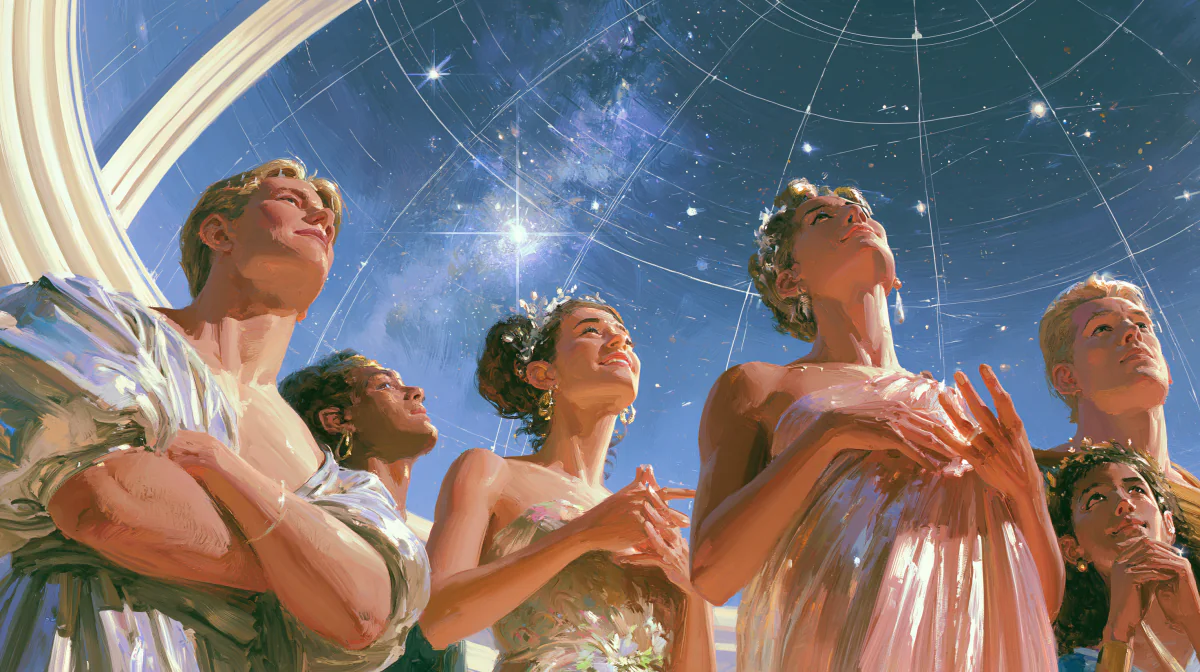
These three share one thing in the design: a night sky. The canon imagines a sky in which a person may, once, light a star for an event of their life, and it draws that sky as shared across a hemisphere, so that the stars of Euronis, Zawadi and Kalfara shine in one firmament.
04Asia and the Pacific
Kyotara, Indoraya, Tasmanis, Oceanis
- Kyotara
- East Asia. A technologically and culturally dense horizon of refinement, discipline and future tension. In the skyline design, a tier of a Kyotara tower is crowned by a pagoda cornice.
- Indoraya
- Southeast Asia. A city of exchange, maritime movement, layered contact and living abundance: the maritime and peninsular world gathered into one city of ports.
- Tasmanis
- Australia and New Zealand. A distinct pair shaped by scale, distance and lucid public space. One detail from the canon: each city keeps the seasons of its hemisphere, so in Tasmanis winter falls in July.
- Oceanis
- Oceania. The island worlds, kept as a region in their own right rather than absorbed into larger neighbours.
The canon expects Oceanis and Tasmanis to be small cities, and says so without apology: “they are frontier settlements, and that is not a flaw but a character.”
05Above and beyond
Nexus Prime and the three locked cities
- Nexus Prime
- An imagined orbital ring above the Earth layer: the symbolic crown of the map, holding its highest ceremonial and archival meaning. Everyone is meant to see it; access is meant to come in layers. The Lexicon adds what it is not: the capital of any real country.
- Lunaris
- The Moon. The first of three frontier cities.
- Polarion
- Europa.
- Marquis
- Mars.
The three frontier cities are on the map for one reason: to keep the future visibly open. They are drawn locked. The Lexicon is exact about them: “They are directional symbols, not present-day promises.”
06How a city is meant to work
Height from work, light from attention
Two principles give the imagined skyline its meaning. Builders raise the height: a building’s size follows what its active members contribute, not how many people follow it. The audience lights the windows: a building glows brighter the more people read and return. The city is meant to show both truths at once and let neither pass for the other.
A third principle keeps the first two honest. Height grants nothing. “The tallest tower of the city receives no right that the smallest house does not have.” Power in this world, the canon says, “is visibility and honor, never dominion.”
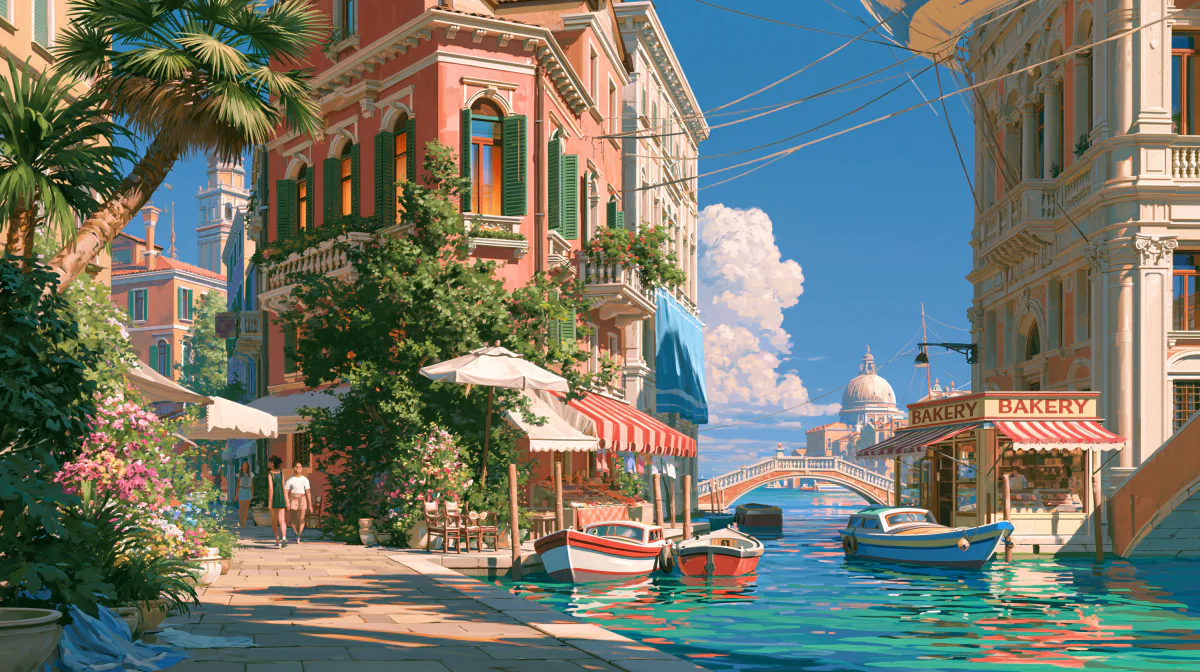
And communities are local. A community belongs to its own city: the photographers of Kyotara and the photographers of Euronis are different communities, with different charters and their own towers. The reason is plain. In one global network a single early group sets the tone for the whole planet. Ten cities are meant to grow ten parallel cultures. A community whose name the whole world comes to know may earn the Global status, and its tower is then raised into Nexus Prime, where every city can see it.
What differs from city to city is culture. What does not differ is the floor beneath it: the charters of communities differ, the canon says, and the Ideals, the project’s moral foundation, are one for all.


07The honest part
Better a dark window than painted light
None of this is built. The canon says so about itself: everything it describes is “a concept and a blueprint, not a built product.” There is no live product yet. Here is what we are building.
The canon also writes down a rule for the day a city does open, so that no later team is tempted to cut the corner: “there is no artificial life in the city. No generated ‘member posts,’ no fake residents, no simulation of activity.” An empty building is to be shown empty.
That is why this paper prints no news from Euronis and no voices from Zawadi. There are none to print. And the map makes no claim on real ground. The Naming Convention says of the cities: “They are symbols of belonging, never of sovereignty.”
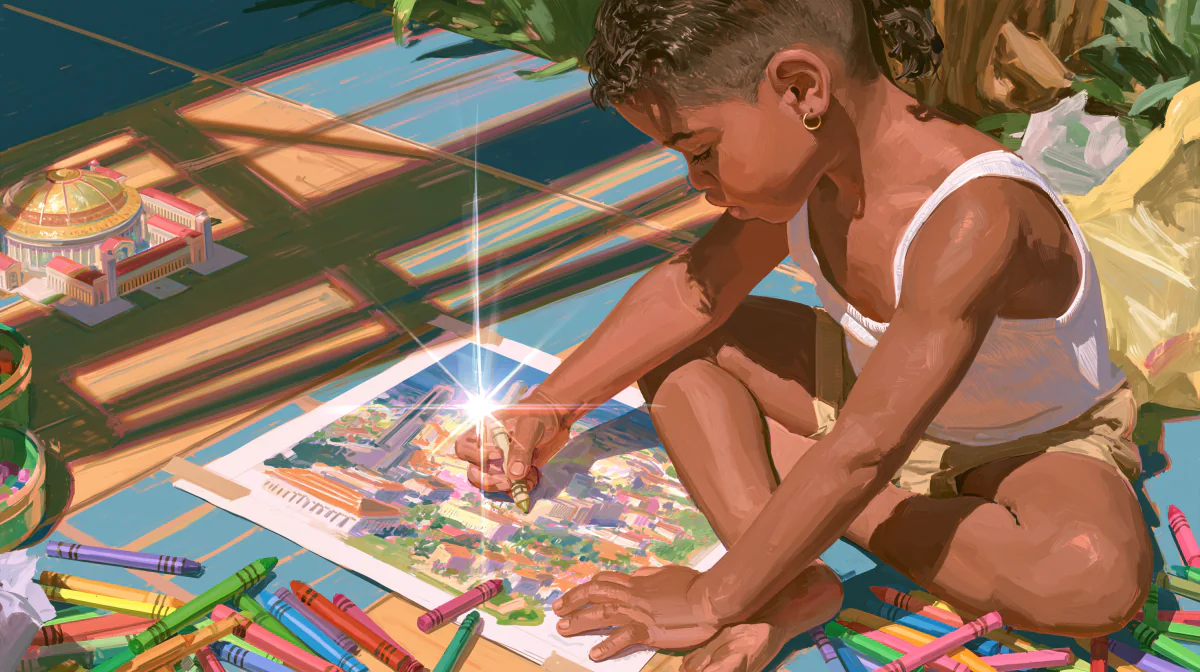
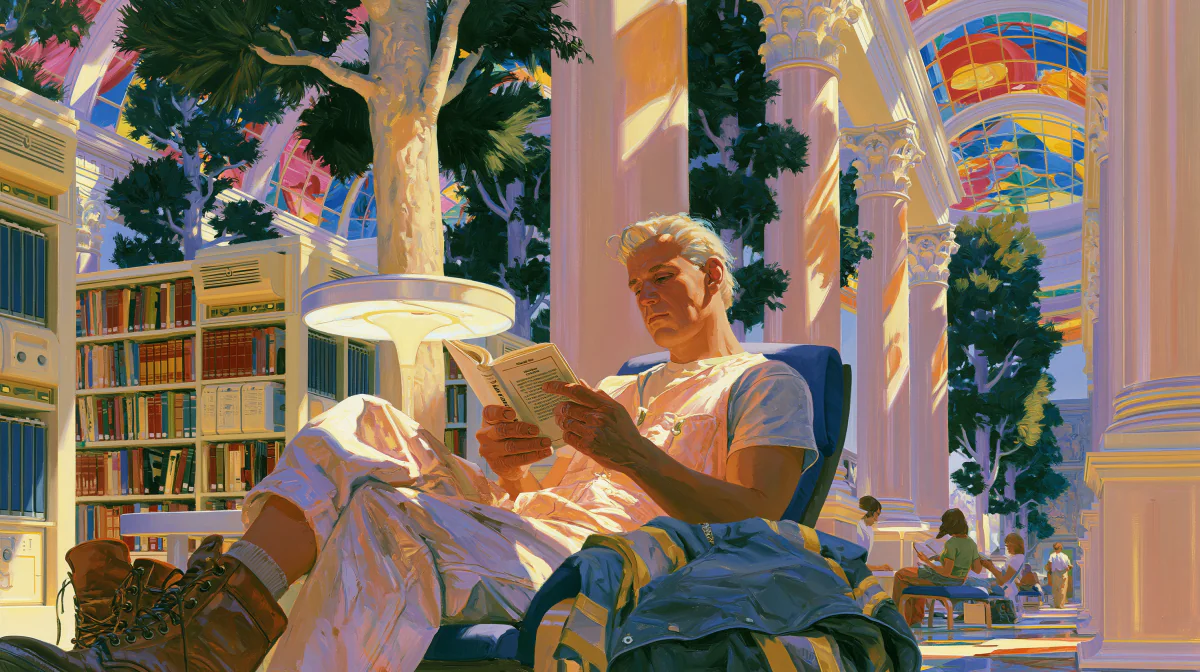
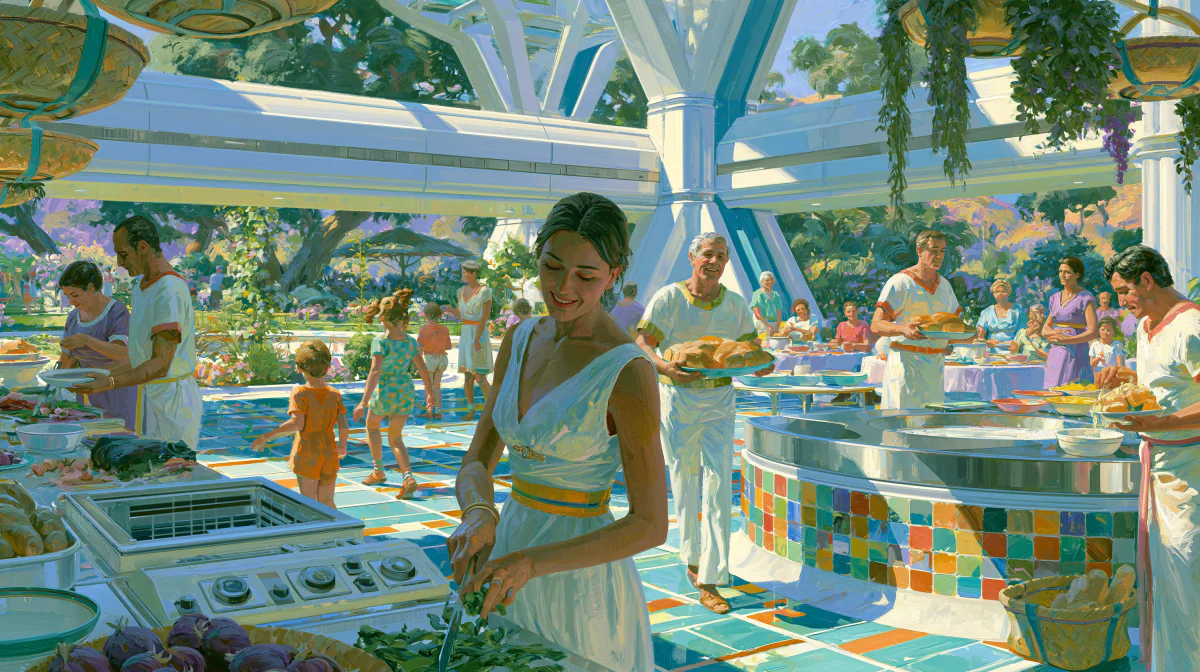
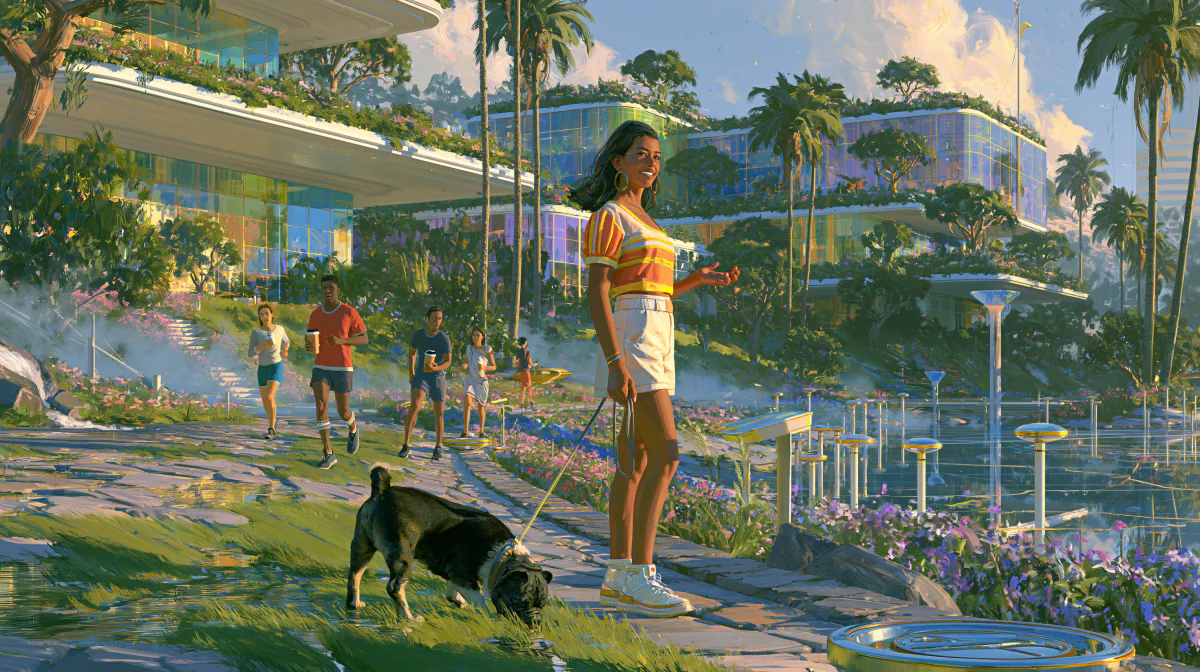
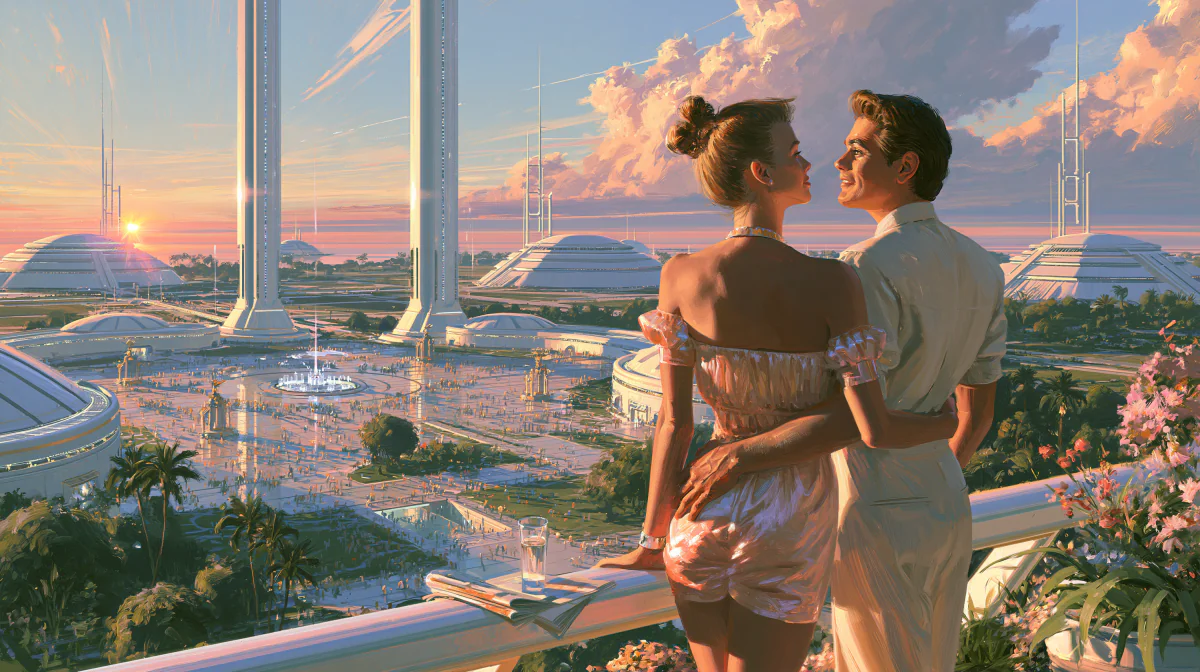
CONCEPTThe pictures on this page are Nexusland Conceptual Art: images of an idea, not views of Northslight, Euronis or any other city. The map is symbolic: a picture of belonging, not real territory, sovereignty, or property. Physical hubs are, in the Lexicon’s words, “a long-horizon aspiration, not something that exists today.”
Sources
- 1Nexusland canonThe City and the Communities, sections 1–4, 16 and 19 (version 2.1, August 2026)
- 2Nexusland canonThe Public Lexicon: The map (June 2026)
- 3Nexusland canonOfficial Public Manifesto: the table of regions, principal cities and public meanings
- 4Nexusland canonNexusland Manifest, Version 3, sections 53–54 and 59–60
- 5Nexusland canonThe Naming Convention v2.0, section 16: Places
Published in the first edition, 20 November 2026. Signed by the paper: Nexusland Today. If a fact here is wrong, it will be corrected openly, with a date. Corrections