How Nexusland is meant to work
A newcomer’s guide to the design: what Nexusland is, what a Resident would do, who makes what, and what exists today. The short version of the last part: a body of writing, and no product.
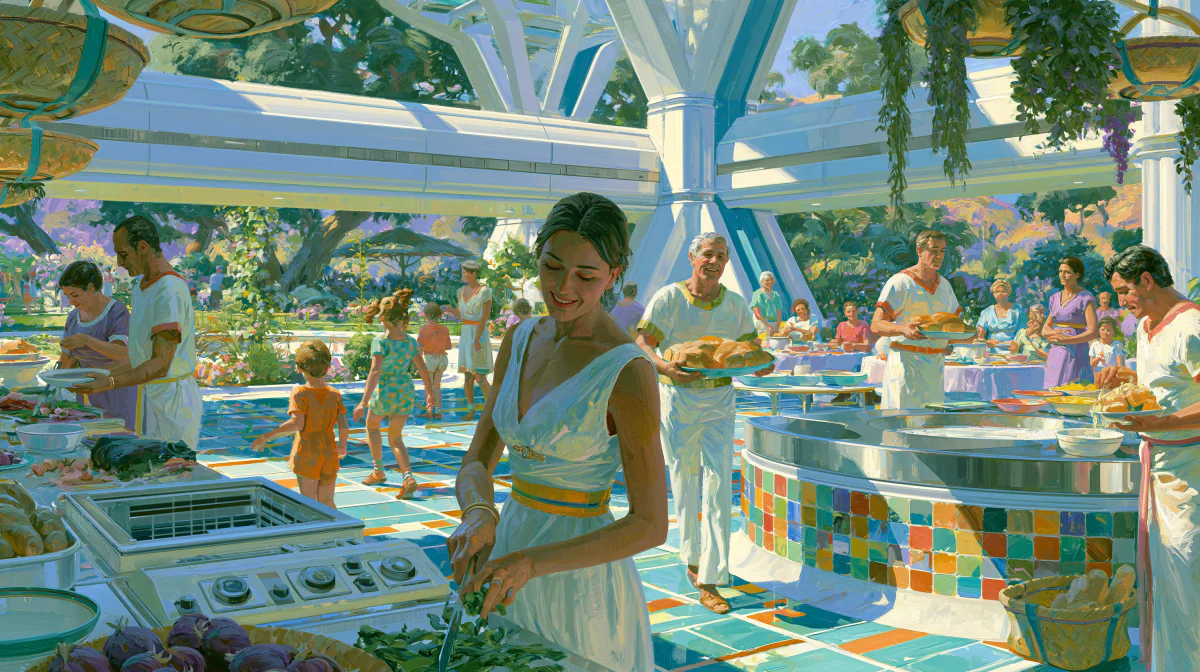
Nexusland is a project to build what its canon calls a social world: “a network built as a civilization — people do not scroll it, they inhabit it.” The shortest account it gives of itself fits in a paragraph. The bright, dignified future that was once promised was never going to build itself, so people have to build it: as products and networks that serve people instead of exploiting them.
No manipulation, no outrage machine, no one reduced to a number — and a way of living that follows.The One-Paragraph Explainer, Nexusland canon
The canon’s own lexicon adds an honest note: Nexusland is a cultural and worldbuilding project by Roman Kotlar — not a country, a government, a bank, a religious authority, or a provider of legal status.
CANONEverything below is a design described in documents. There is no live product yet. Here is what we are building.
01The person
A Resident, not an account
Anyone who joins is called a Resident. The word signals inhabiting a world of shared standards and direction, not merely using a platform. It is not legal residency or an immigration status of any kind.
The canon describes a Resident as “a person with a name, a face, a room, a path, and a voice”. The profile is meant to be a calling card, not “a questionnaire for an algorithm”: the minimum is visible by default, and the person switches on the rest.
The path is a ladder of ranks: Novus, Explorer, Inventor, Creator, Curator. A rank marks growth and service. It cannot be bought, and it creates no legal status or employment.
02The House
One of four, chosen
A Resident chooses one House. A House is a developmental orientation and a symbolic identity: in the design it shapes what the feed brings forward and which missions appear. It is not a caste or a locked group, and it can be changed about once a year. There are four, and the set is closed.
- House of Mentis
- Intellect, systems, science, engineering, research, technical craft.
- House of Fortitudo
- The body: health, strength, endurance, recovery, self-mastery.
- House of Cultura
- Art, story, design, music, memory, the aesthetic life.
- House of Aequalitas
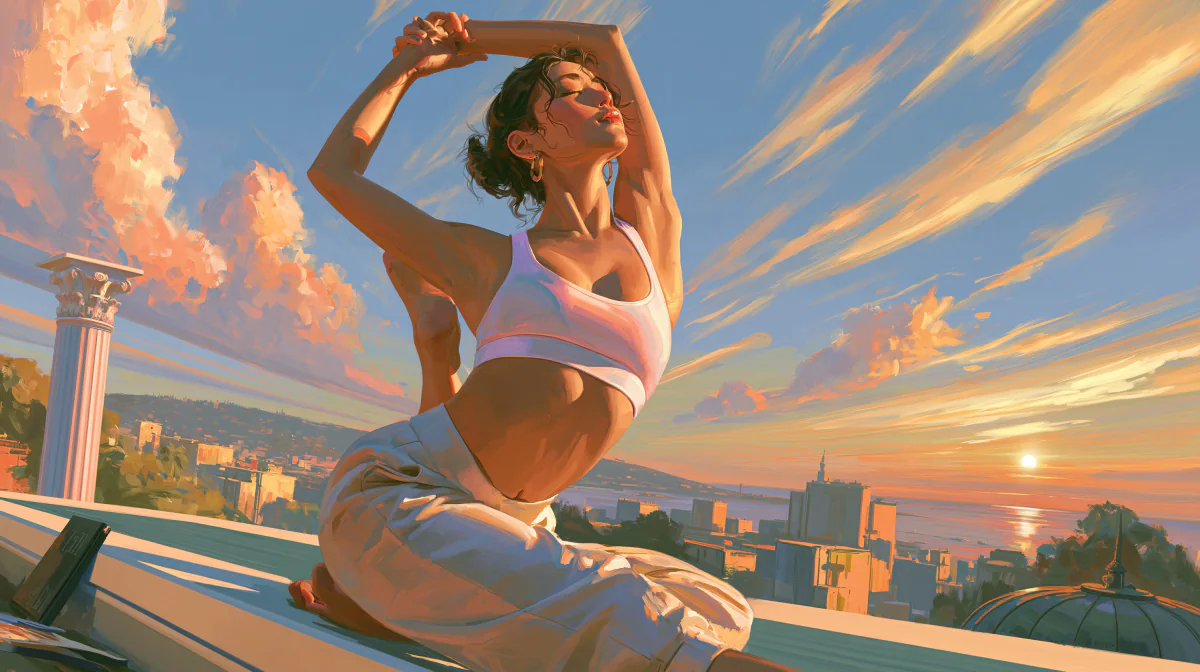
- Stewardship: governance, operations, fairness, coordination, care for the whole.

03The feed and the city
A stream meant to help, not to hold
The central interface in the design is the Universal Feed: a single stream where content, mini-apps, missions, learning and tools sit together. The lexicon describes it as an active surface that helps people grow, not a passive scroll built to hold their attention. A mission is the smallest unit of action in it: a bridge between an idea and doing something about it.
Around the feed the canon draws a city. The Project Passport puts it in one sentence: communities are the buildings of living cities, status is earned by work alone, and Residents build the world, their communities, and themselves. Its spoken version is shorter: “The network is our city, not our feed.”
04Three answers
Who comes, what they do, why they return
One short canon statement, The Three Answers, puts the whole design to three plain questions.
- Who is the first user?
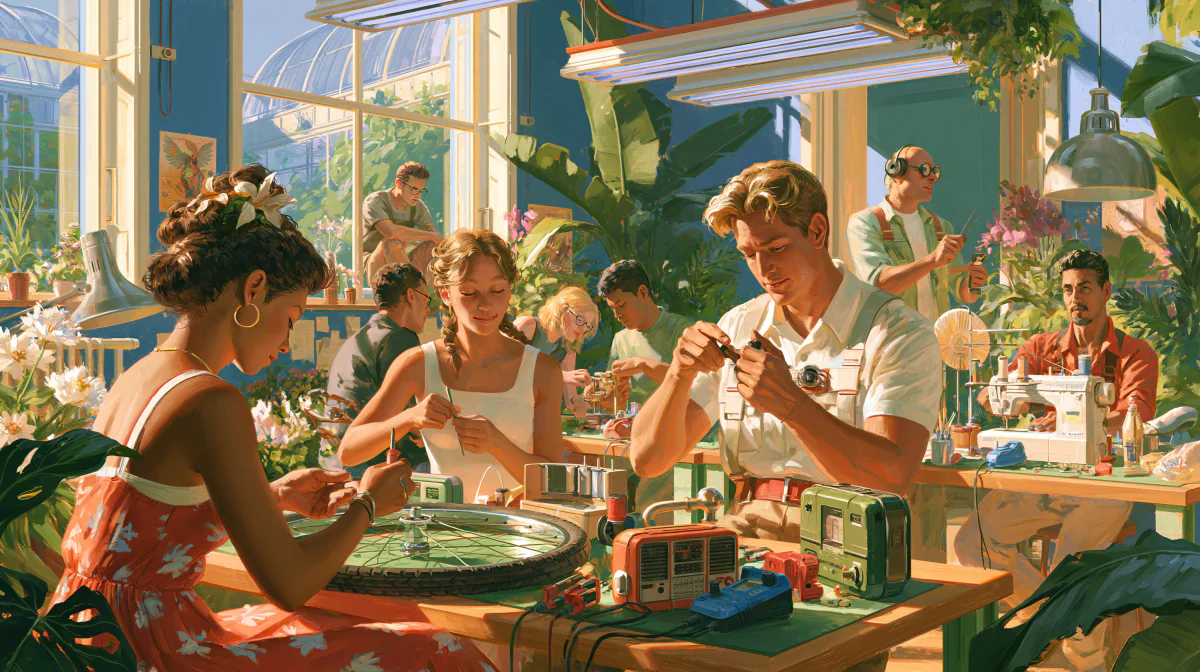
- “A tired builder, 25–45.” Someone who builds side projects, worlds in games or invented universes on paper, and is tired of building for an algorithm instead of meaning.
- What do they do in the first 60 seconds?
- They open the feed with no registration. It begins with a sunrise over the panorama of their own city, chosen by region. Then one small action, if they wish: “light a star, write your name into the city capsule, or claim a brick”. All three are free gestures inside the design. A brick is not a share, not a donation, not property, and not a right to anything.
- Why do they return tomorrow?
- Four reasons, in order: the new daily portion; the result of yesterday’s small task; what grew overnight in the city and in the communities they follow; and the people met along the way.
The statement adds a rule of method: “Day two is designed before day one — because the world’s currency is returns, not registrations.” And it sets one test for all three answers at once: a hundred people returning daily without any coercion, and the first symbolic bricks laid by early participants — free, and carrying no share or claim. That is a gate, not a date.
05Who makes what
Substance, surfaces, boundaries
Above everything the operating map places the Ideals, the moral foundation of the project. Beneath them the design places two offices, both limited: a Founder who “keeps one lock, not a throne”, and a Steward, to be elected, who “represents, but does not rule”. The rest follows one formula.
- Houses: substance
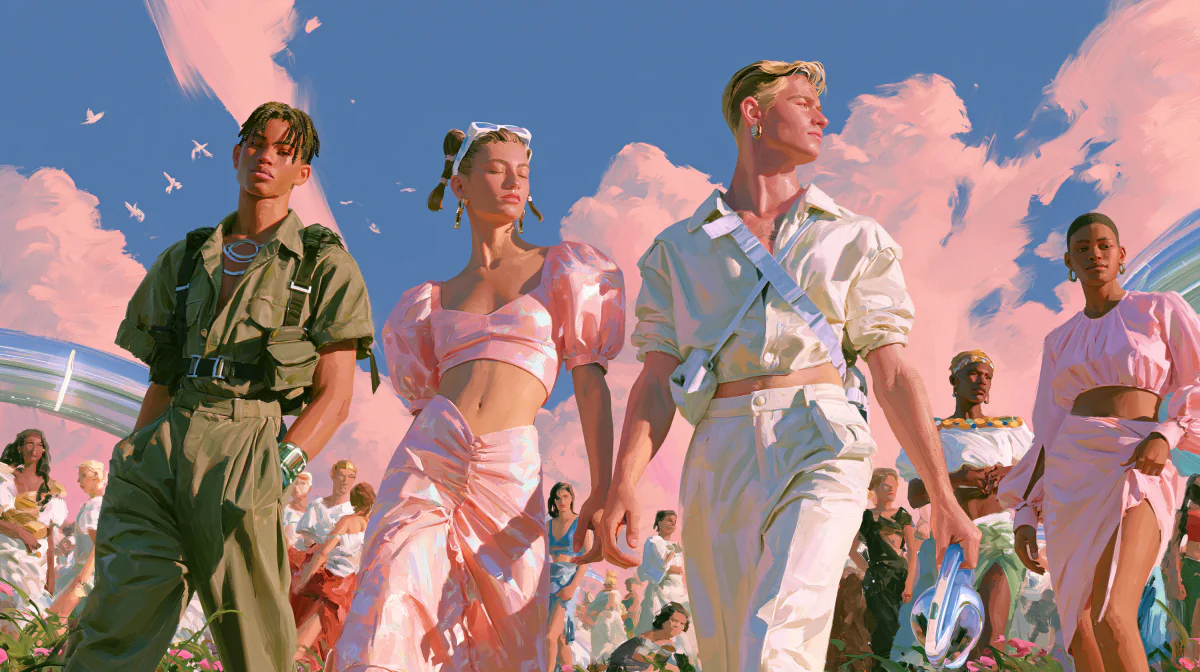
- Mentis, Fortitudo and Cultura create the living content of the world: media, instruments, education, events, products.
- Initiatives: shared surfaces
- They own what is too large or too cross-cutting for one House: the feed, the profile, the design system. They own the surface, not the content.
- Aequalitas: boundaries
- It is meant to protect spirit, law, fairness, safety, the common funds, and canon. It may stop harm, but may not replace creation.
CANONNone of these bodies exists yet. Nobody has been elected. Today the project is run by one person.
An idea is meant to travel a short route. It starts in a House. If it concerns only that House, the House owns and ships it, and no one else is asked. If it needs a shared surface, it enters an Initiative and the content stays with the House. If it touches law, safety, canon or money, Aequalitas reviews it.

06Today
What exists, and what does not
None of the above can be opened, joined or visited. There is no feed, no profile and no rank to earn. No House has members. No city exists.
The map is symbolic: a picture of belonging, not real territory, sovereignty, or property. Physical hubs are, in the lexicon’s words, “a long-horizon aspiration, not something that exists today”.
What exists today is a body of writing: the canon these pages are drawn from. We are at the very beginning, and the order of work is fixed by gates, not by a calendar.
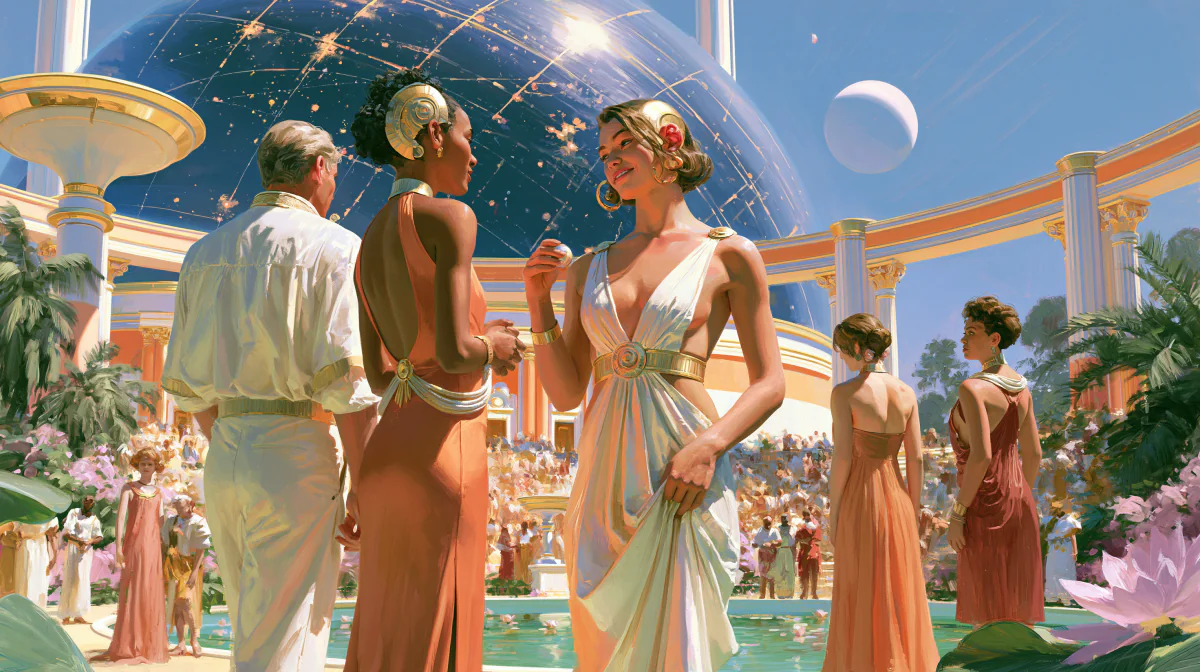
The Project Passport gives the whole design one verb: to build — yourself, your community, the world, the future. The slogan says the same in five words: “We build the promised future.”
Sources
- 1Nexusland canonHow Nexusland Works (reference map)
- 2Nexusland canonThe One-Paragraph Explainer (June 2026)
- 3Nexusland canonThe Three Answers
- 4Nexusland canonProject Passport
- 5Nexusland canonThe First Resident, sections 4–5 (August 2026)
- 6Nexusland canonResident Profile and Path, sections 1–3 (August 2026)
- 7Nexusland canonThe Public Lexicon (June 2026)
Published in the first edition, 20 November 2026. Signed by the paper: Nexusland Today. If a fact here is wrong, it will be corrected openly, with a date. Corrections